Confidence on skis is mostly a matter of trust. You trust the ski to hold when you commit to a turn, to glide when you point it downhill, to stay predictable when the snow changes under you. Tuning is how you keep that trust. It's not a performance upgrade for experts. It's the baseline that lets any rider ski the way they already know how.
At Maison de Ski, we tune everything from kids' rental skis to demo skis that get ridden hard every week. The complaints are similar across ability levels: it slips, it chatters, it feels slow, it doesn't want to turn. Most of the time, the fix is a tune.
For beginners: predictable beats fast
Beginners don't need a fast ski. They need a ski that does the same thing every time. Dull edges make a beginner's wedge slide instead of grip, so the lesson turns into a battle with the snow. Sharp edges and a clean base let the ski respond to the movements an instructor is teaching.
That's why tuned rental gear matters so much for first-timers. When the equipment does its job, a beginner can focus on balance and stance instead of fighting a ski that won't hold. A dull rental ski teaches the wrong lesson, because it makes a correct movement feel like a mistake.
A first lesson is expensive, and a lot of it is spent learning to feel the snow through the ski. Gear that slips makes that harder to learn. That is one reason every rental at Maison de Ski is tuned and inspected before it leaves the shop.
For intermediates: the jump from surviving to skiing
The intermediate stage is where tuning pays off most. You're starting to carve, to trust your edges on steeper groomers, to ski faster than walking pace. A ski with dull edges makes all of that feel sketchy. A tuned ski lets you feel the edge engage, which is the feedback you need to improve.
It shortens the learning curve without changing anything about your technique. You still have to do the work. The ski just stops arguing with you about it. Riders who tune regularly often describe the same moment: the first turn where the edge holds and the ski comes around on its own.
For advanced riders: consistency at speed
At speed, small problems get loud. A slightly rounded edge chatters on ice. A base that isn't flat feels twitchy in long turns. Wax that's wrong for the temperature drags on runouts. Advanced riders notice these things because they're asking more of the ski.
Regular tuning keeps the equipment from becoming the limiting factor. If you ski at the level where you can feel a half-degree of edge angle, a tune every few weeks is worth more than a new pair of skis. Consistency is the thing that lets you push, because you know the ski will behave the same way run after run.
Renting gear for this trip?
Maison de Ski fits skis, snowboards and snowshoes at I-70 Exit 241 in Idaho Springs, 25 miles from Loveland and on the way to every major I-70 resort. Early pickup is free after 2 PM the day before.
Why dull edges feel sketchy on Colorado ice
Colorado snow gets groomed, sun-baked, refrozen and groomed again, which leaves hard, polished surfaces on plenty of popular runs. On that snow, a sharp edge is the only thing connecting you to the hill. A dull edge skids, catches, releases and skids again. Your body reads that as instability, so you slow down, lean back and tense up.
The snow didn't change. The edge did. That's the useful part: it means the sketchy feeling is often fixable in a day, for less than the price of a lift ticket. Before you blame your technique or the conditions, check the edge.
What a tune actually fixes
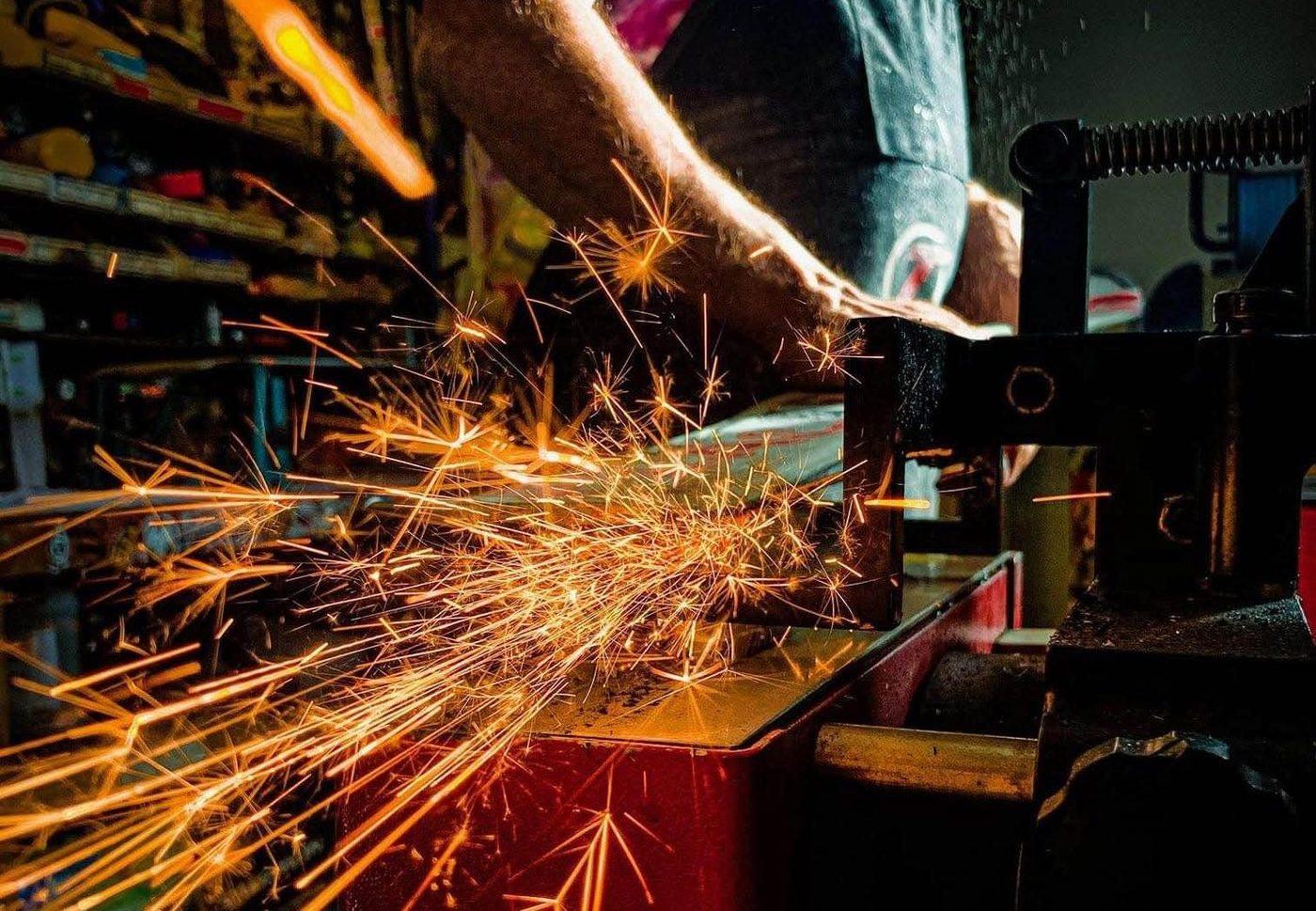
A tune addresses the things you feel but can't always name. Edges get sharpened to a consistent angle. The base gets cleaned, filled and waxed. High spots get flattened. On a full tune, a stone grind restores structure and glide. The result is a ski that holds, glides and turns the way it did when it was new.
If you're not sure which level you need, describe the problem. Chattering on hard snow points to edges. Slowness on runouts points to wax. A ski that won't track straight points to the base. At Maison de Ski, no appointment is needed, so it is easy to bring the skis in and ask.
What each tune includes
- Quick Tune $30: edge sharpen and hot wax
- Mid-Level Tune $45: belt sand, edge sharpen, hot wax
- Full Tune $65: P-Tex fill, belt sand, edge sharpen, stone grind, hot wax
- Hot Iron Wax $15, or a quick hot wax for free
- Binding Adjust & Function Test $20, required after any adjustment
Confidence is maintenance
The riders who look most confident on the hill are usually the ones whose gear works. They aren't fighting their skis, so they can think about the line instead of the equipment. That's the real benefit of tuning: fewer surprises, more of your attention on the skiing, and a season that feels like skiing instead of gear management.
It's a small habit that changes how a season feels. Drop your skis off before the first trip, keep the edges sharp, and let the mountain be the hard part. The riders who ski the most days are usually the ones who take care of their gear between them.
Cost is smaller than most people expect. A quick tune is $30, and a hot wax is $15, which is a small fraction of what a lift ticket costs on a holiday weekend. Compared with new skis, or a season cut short by injury, it is not much to spend.
Common questions
How do I know if my skis need tuning?
The simplest test is the edge. Run a thumb lightly across the edge; if it slides instead of grabbing, it is dull. Other signs are a chalky white base, visible rust, deep scratches you can feel, or a ski that chatters on hard snow. Any of those means it is time.
Can tuning help a nervous intermediate skier?
Yes. Much of what feels sketchy to an intermediate is a dull edge slipping on hard snow. Sharp edges and fresh wax make the ski engage predictably, which gives you the feedback you need to trust your turns. It does not replace lessons, but it makes them easier to apply.
Do I need a full tune or just a wax?
If the base is clean and the edges are still sharp, a hot iron wax at $15 may be all you need. If the edges are dull or the base is dry and scratched, a quick tune at $30 or a mid-level tune at $45 is a better fit. A full tune at $65 is for base damage or when the base needs a stone grind.